Animals
cute cat coloring pages
10 free printables · Updated 2026-09-17
Household cats do not all read as the same shape on paper. Some of these sheets are fluffy sitters. Some are striped loafs. One is only a silhouette in a window. Print a face if you want a five-minute page, or a whole room scene if someone in the house actually lives with a cat.
Fluffy coats, tabby stripes, and cartoon faces
Real cats vary more than dinosaur toys do, and the drawings here lean on that. A long-haired sit-down portrait has broken outlines around the cheeks and chest, the way a Persian or a ragdoll reads as a cloud with eyes. A short-haired tabby on a cushion gets clear stripe rings on the tail and a compact loaf pose. The cat at the window is almost a hieroglyph: ears, whiskers, a back, and curtains. That last one is closer to how a cat actually occupies a house — as a dark shape against glass — than as a big-eyed mascot.
The faces are still cartoon on purpose. Eyes are oversized. Noses are tiny triangles. Mouths smile. That is the anthropomorphic part: a real cat does not grin at a fishbowl. Kids recognize “cat” faster when the expression is human, and they will stay on the page. You can still talk about breed differences while they color. Fluff gets layered pencil or a broken crayon stroke. Tabby stripes stay as stripes; coloring over them into one flat orange is a choice, not a mistake. The bow-tie portrait is the most dressed-up sheet in the pack. No living cat wears a bow unless a human put it there. Treat it as costume, not anatomy.
Whiskers are the detail that separates a cat page from a generic animal page. They are thin. Markers will fatten them. Colored pencils will keep them. If a child colors the whole head first and the whiskers vanish into the fur, that is normal. Print a second copy of the portrait they liked and try the whiskers last next time.
Sitting still: two portraits to start with
These two are mostly face, chest, and tail. They suit a first try, a younger child, or anyone who wants a cat without furniture in the way.
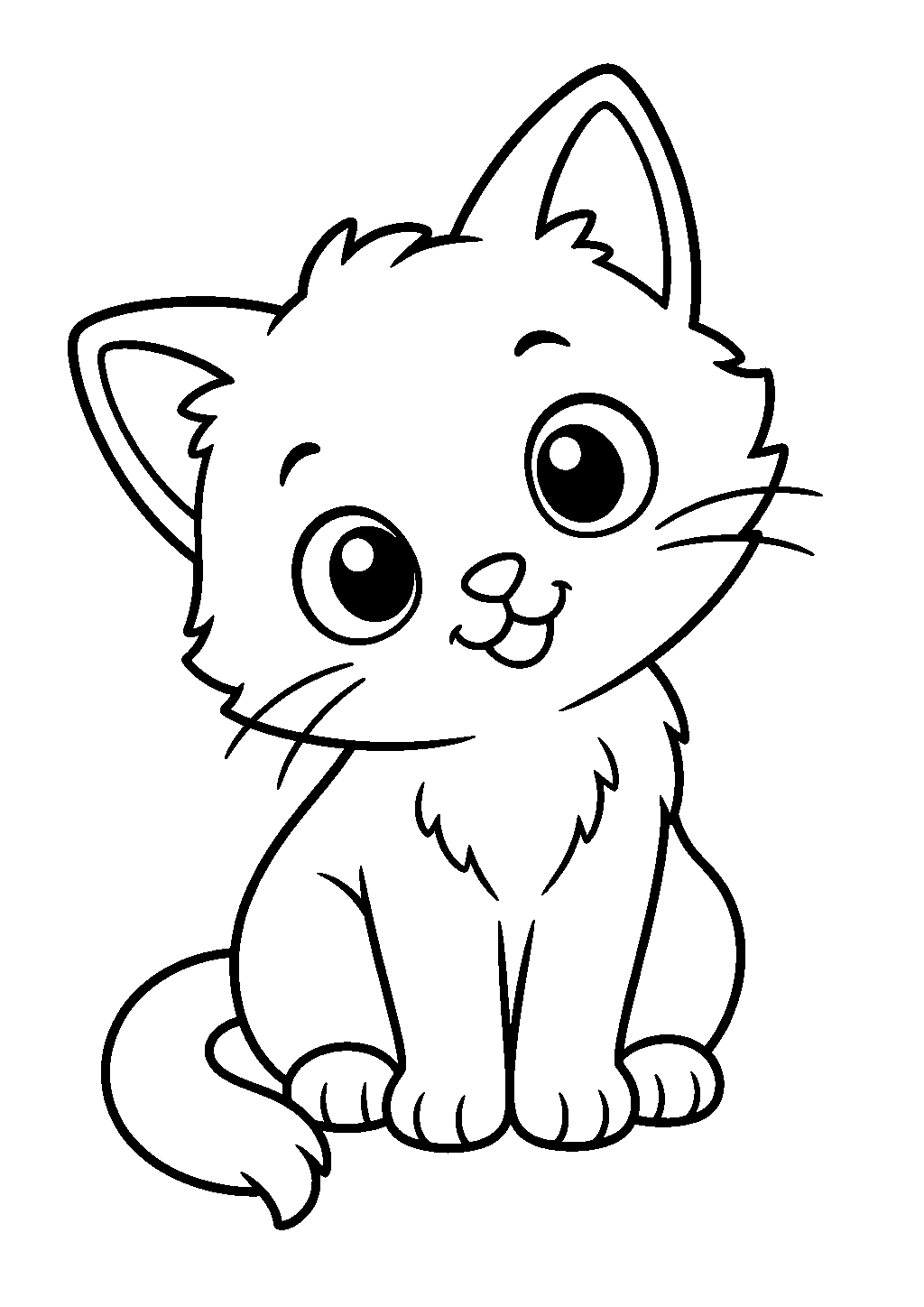
A fluffy kitten sits facing forward with round eyes and a curled tail. 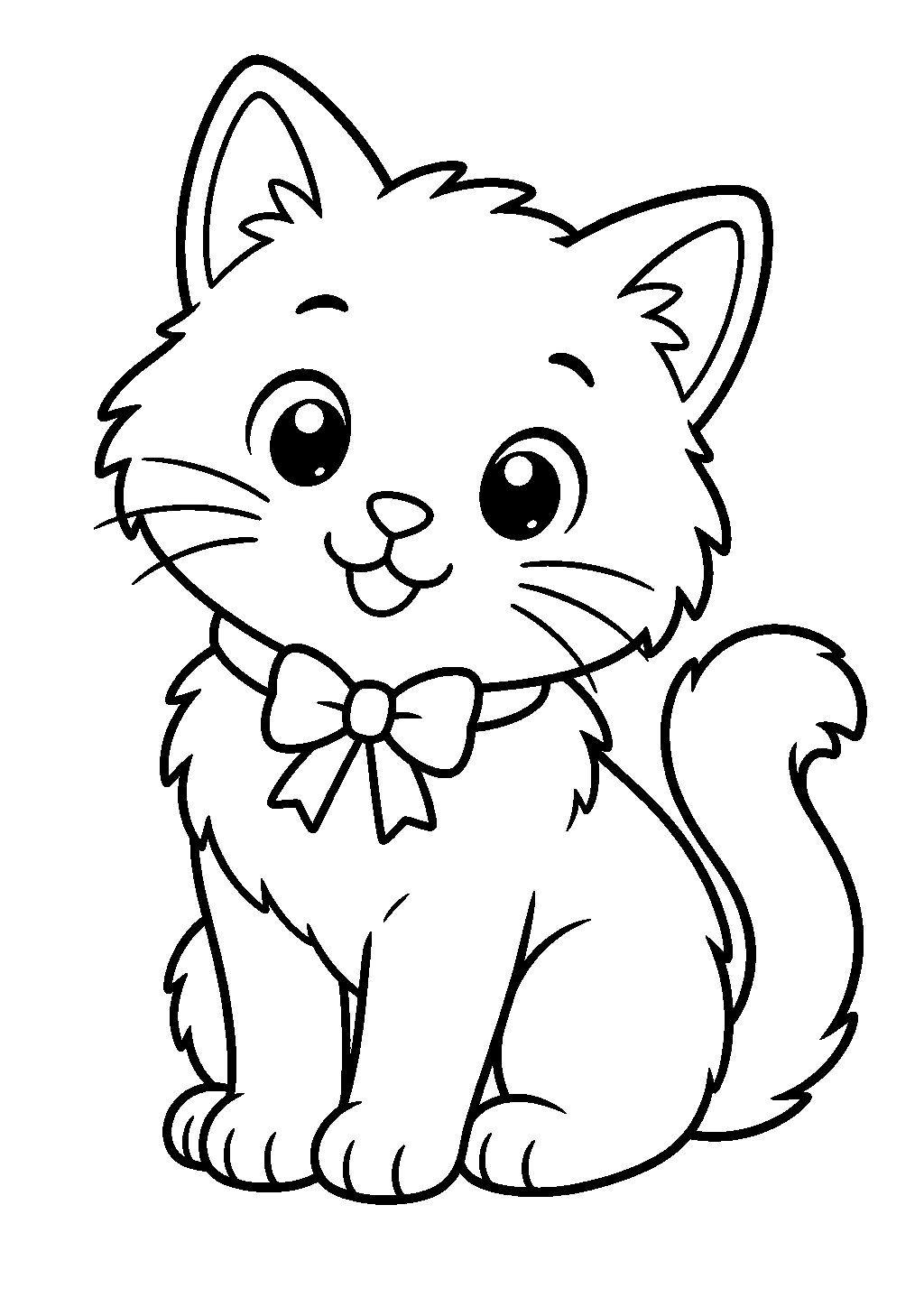
A fluffy cute cat sits proudly in a simple bow tie.
Preschool, early grades, and the slow sit
Preschool
Preschoolers need the sitting portraits and the leaping yarn page. The shapes are large. The yarn ball is a bonus circle they can fill in any colors they want. Do not hand a three-year-old the window scene and expect curtains to stay neat. Hold the crayon with them on whiskers if they ask, then back off. One cat, two colors, and a finished page is a success.
Early grades
Early elementary kids — roughly kindergarten through third grade — can handle play scenes and the pair at the milk bowl. Two kittens on one sheet means they have to decide whether the cats match. The butterfly page has wing spots that invite a pattern. This is also the age that will argue about “correct” cat colors. A calico is fine. A blue cat is fine. The fish in the bowl can be gold or impossible. The only useful rule is: leave the eyes until last if they want the pupils to stay dark.
The slow sit
Older kids and adults who color to wind down should skip the leaping kitten and take the window, the stretch on the rug, and the plant peek. Those sheets have fabric folds, curtain ties, scalloped rug edges, and leaf veins. They are still cute, not mandala-dense, but they reward a quiet twenty minutes with a sharp pencil. If you share the house with a real cat, the window page is the one that usually gets a laugh of recognition.
Yarn, butterflies, milk, and a fishbowl
Play pages. The cat is doing something, so there is a second object to color — yarn, a butterfly, a shared bowl, or a round fishbowl.
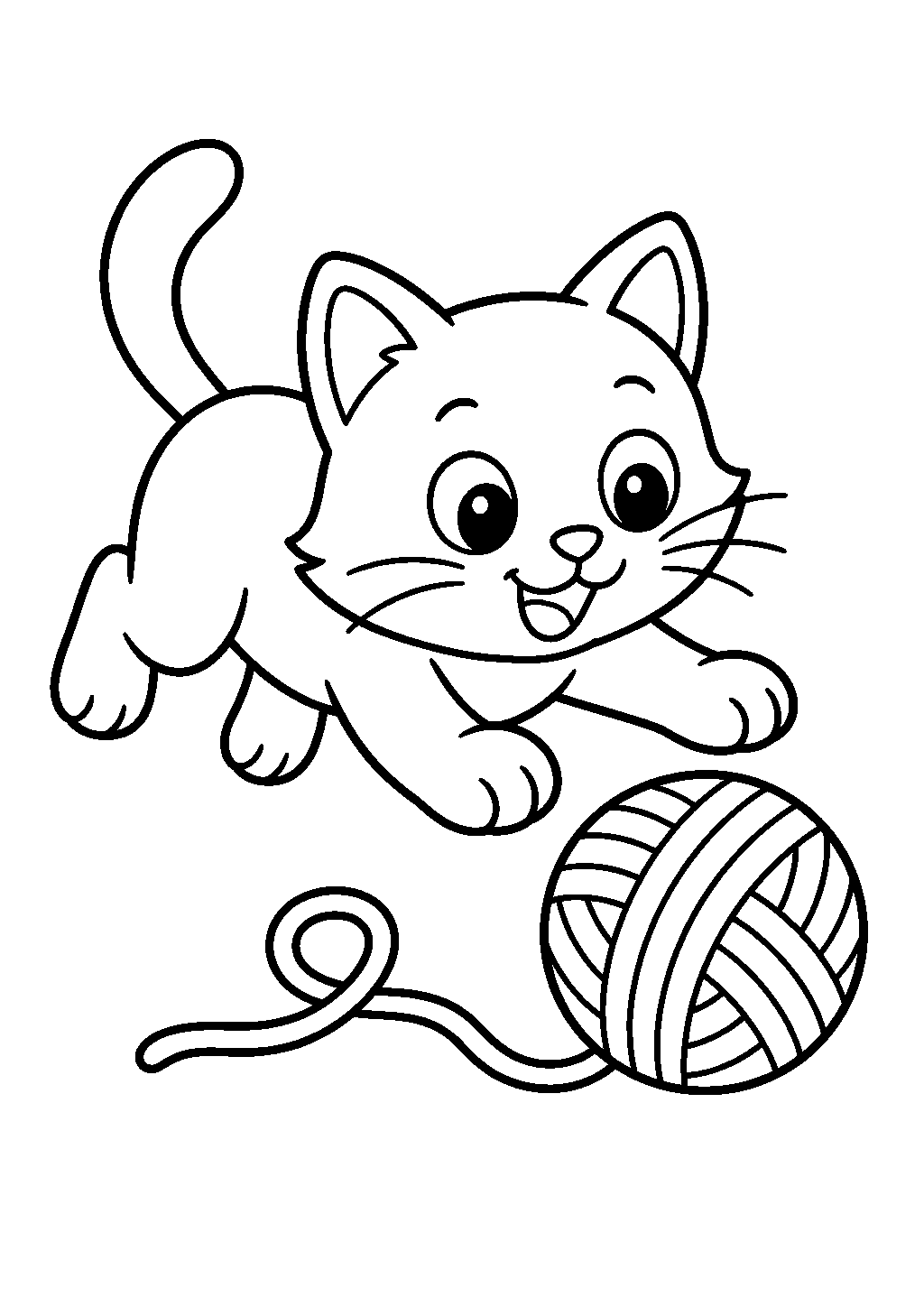
A leaping cute cat chases a ball of yarn across the floor. 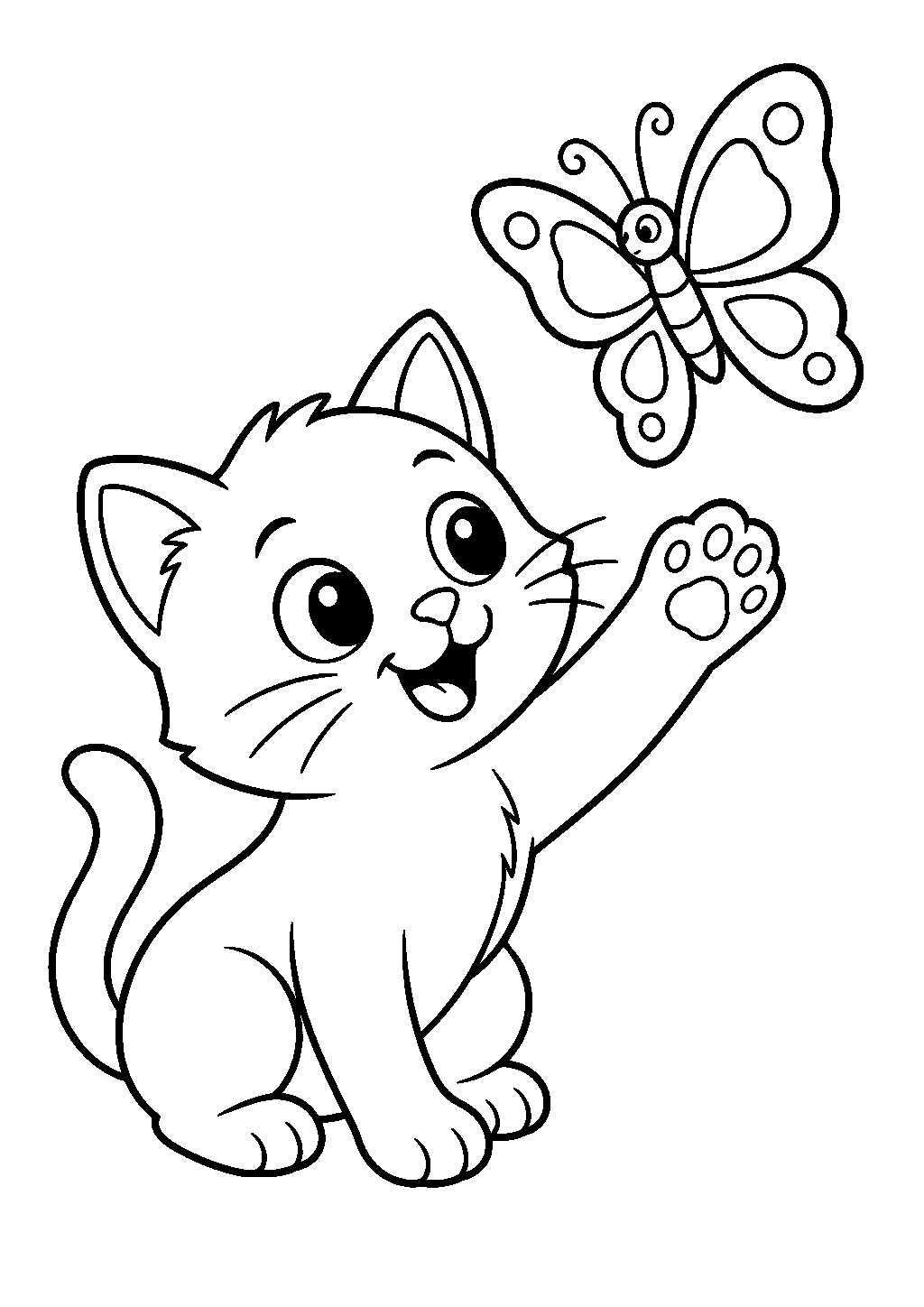
A playful kitten reaches a paw toward a butterfly. 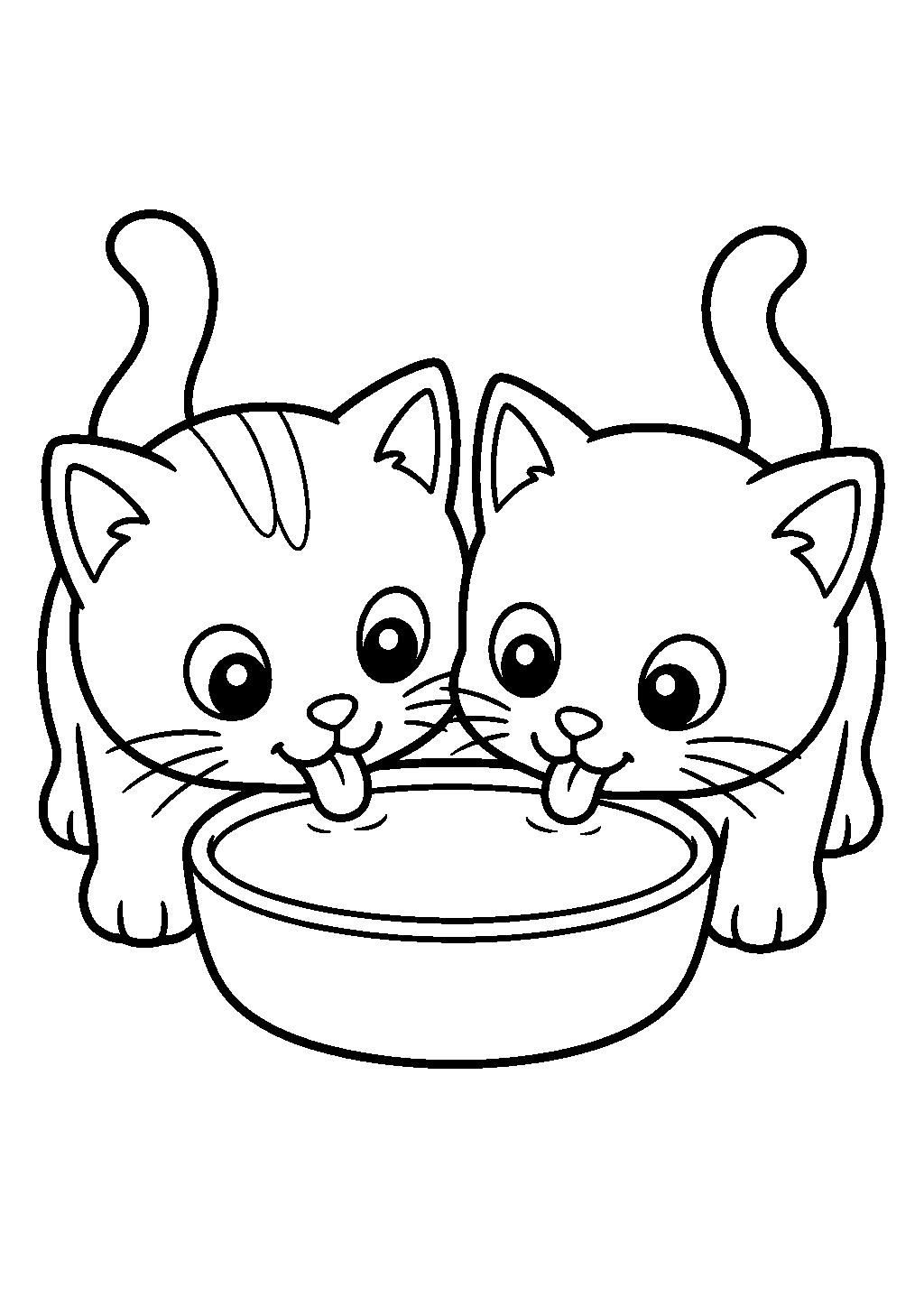
Two kittens share a milk bowl, tongues out together. 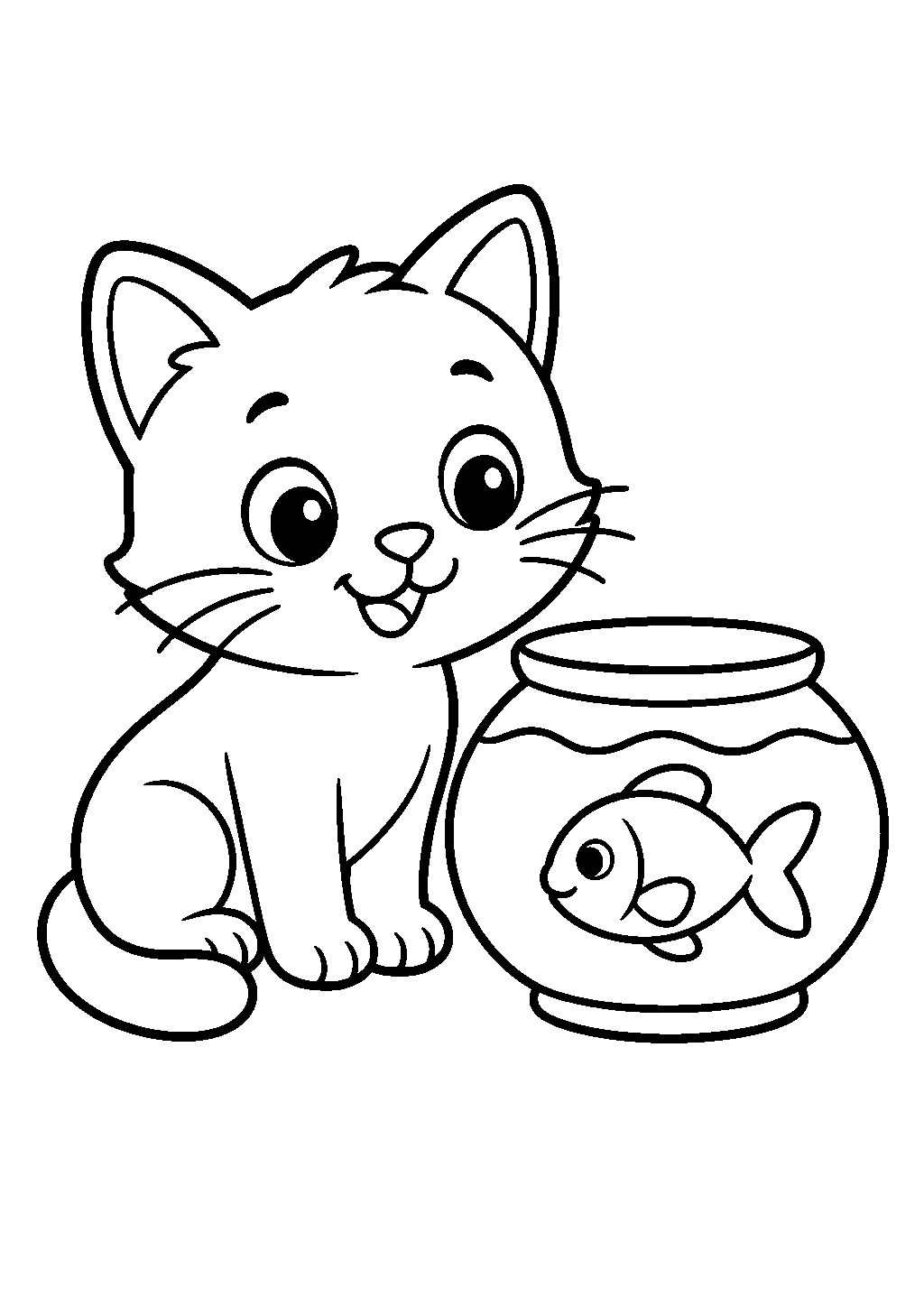
A curious cat sits beside a round fishbowl and studies the fish.
What to color fur and whiskers with
Crayons cover a fluffy chest quickly and look right on the big portraits. They smear on whiskers. If the only tools in the house are crayons, accept thick whiskers or skip them. A white crayon on white paper will not rescue a whisker that already disappeared into orange fur.
Colored pencils are the best match for this theme. Fur is directional. Short strokes from the spine toward the belly read as coat. You can leave a little paper showing through on a long-haired portrait so it does not turn into a brown blob. Pencils also let you keep the tabby rings on the sleeping cat instead of flooding them. Fine liners work for eyes and noses after the pencil is done, not before — ink first, then wax or pigment on top, and you will drag the ink.
Markers are tempting because cat outlines are clean. On copy paper they bleed, and whiskers become bars. Washable classroom markers will show through 20 lb stock. Put scrap paper under the page every time. If you only have markers, choose the window silhouette or the stretch on the rug; those sheets have larger regions and fewer hairs. Save the bow-tie portrait for pencils. Alcohol markers will ghost onto the next cute cat sheet in the stack, and onto the table.
Window ledges, cushions, and houseplants
These are the household cats: asleep on a cushion, watching through curtains, stretching on a rug, or hiding behind a potted plant.
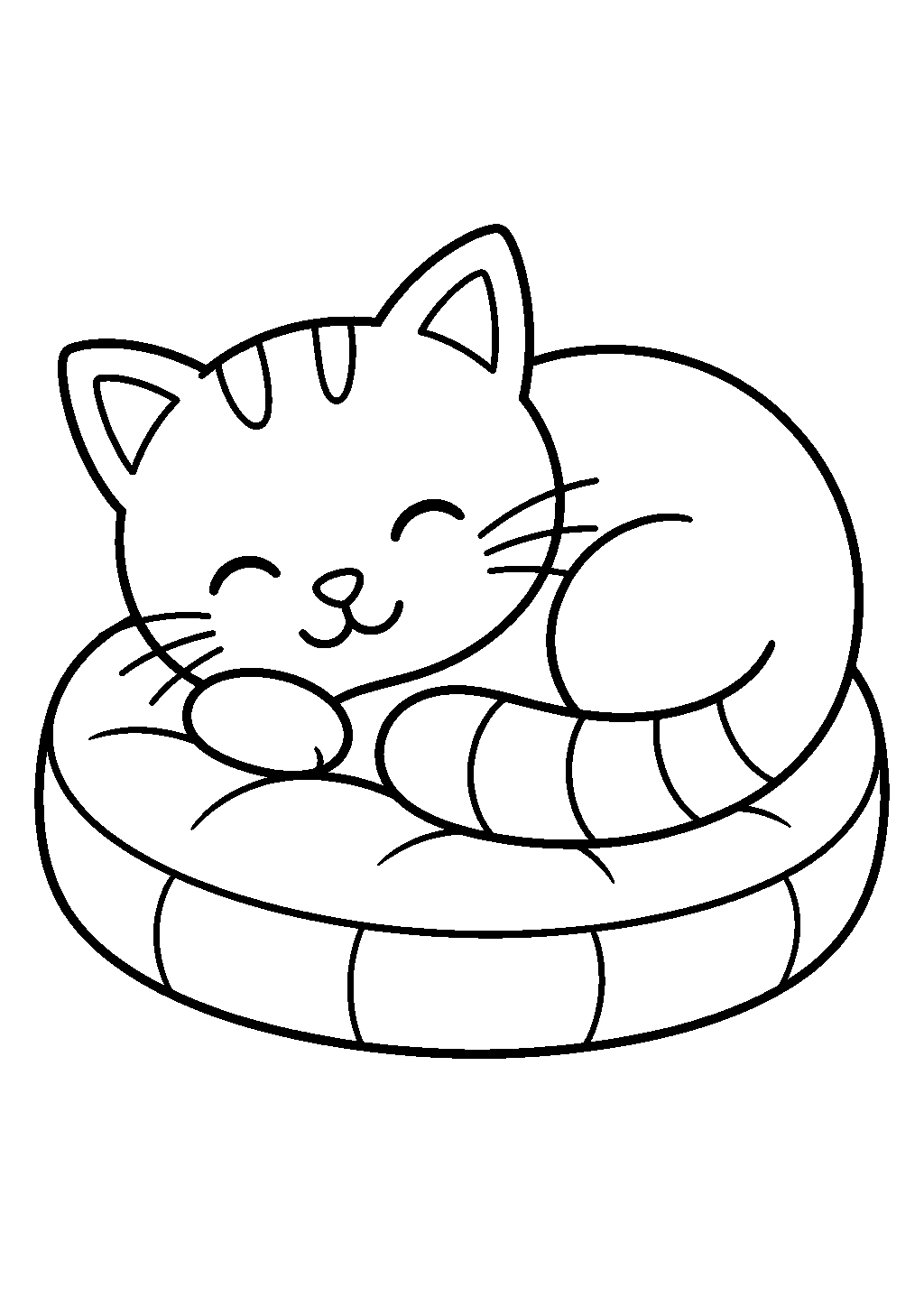
A striped cat sleeps on a round cushion with its tail wrapped close. 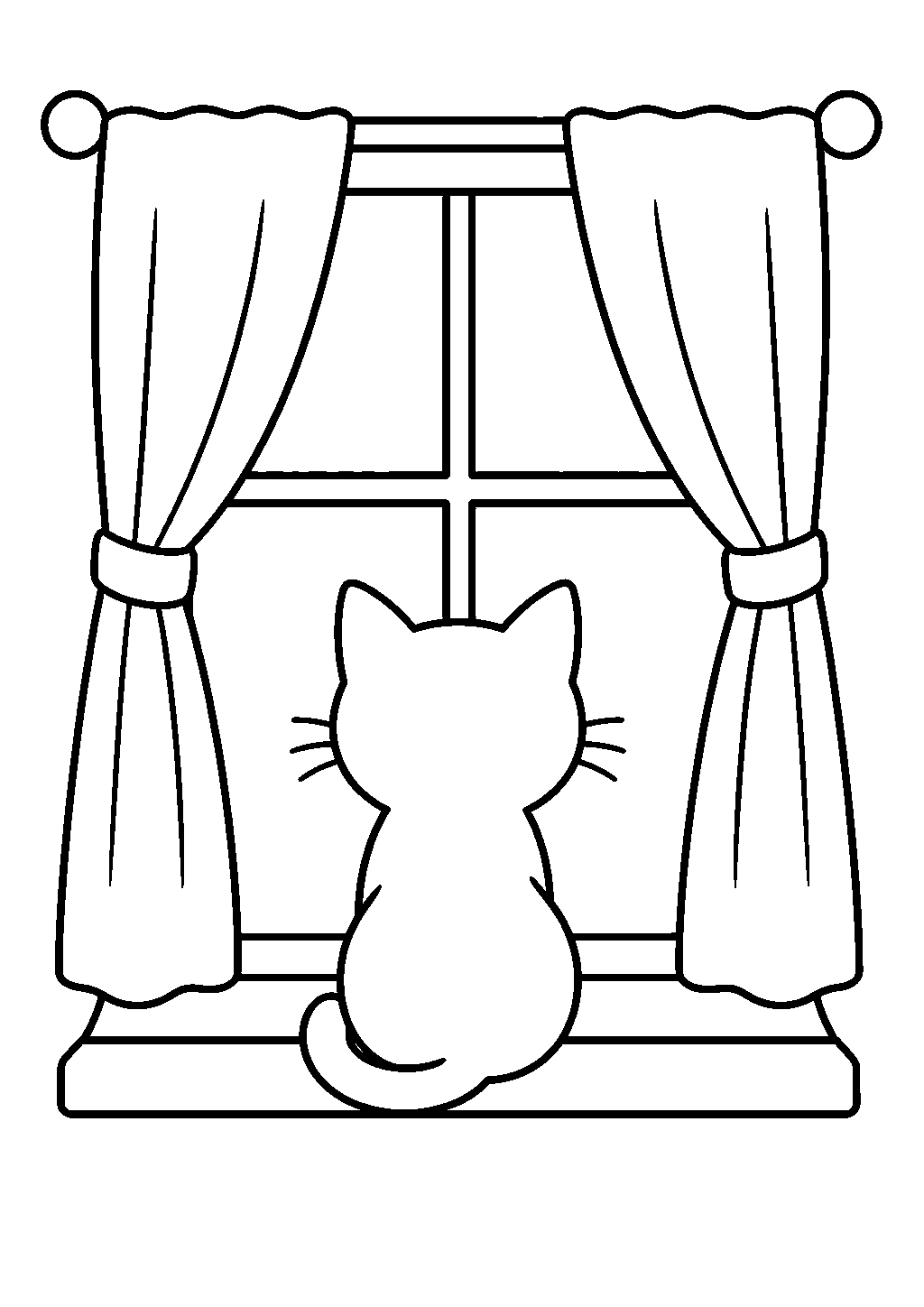
A cat sits on the windowsill, watching through parted curtains. 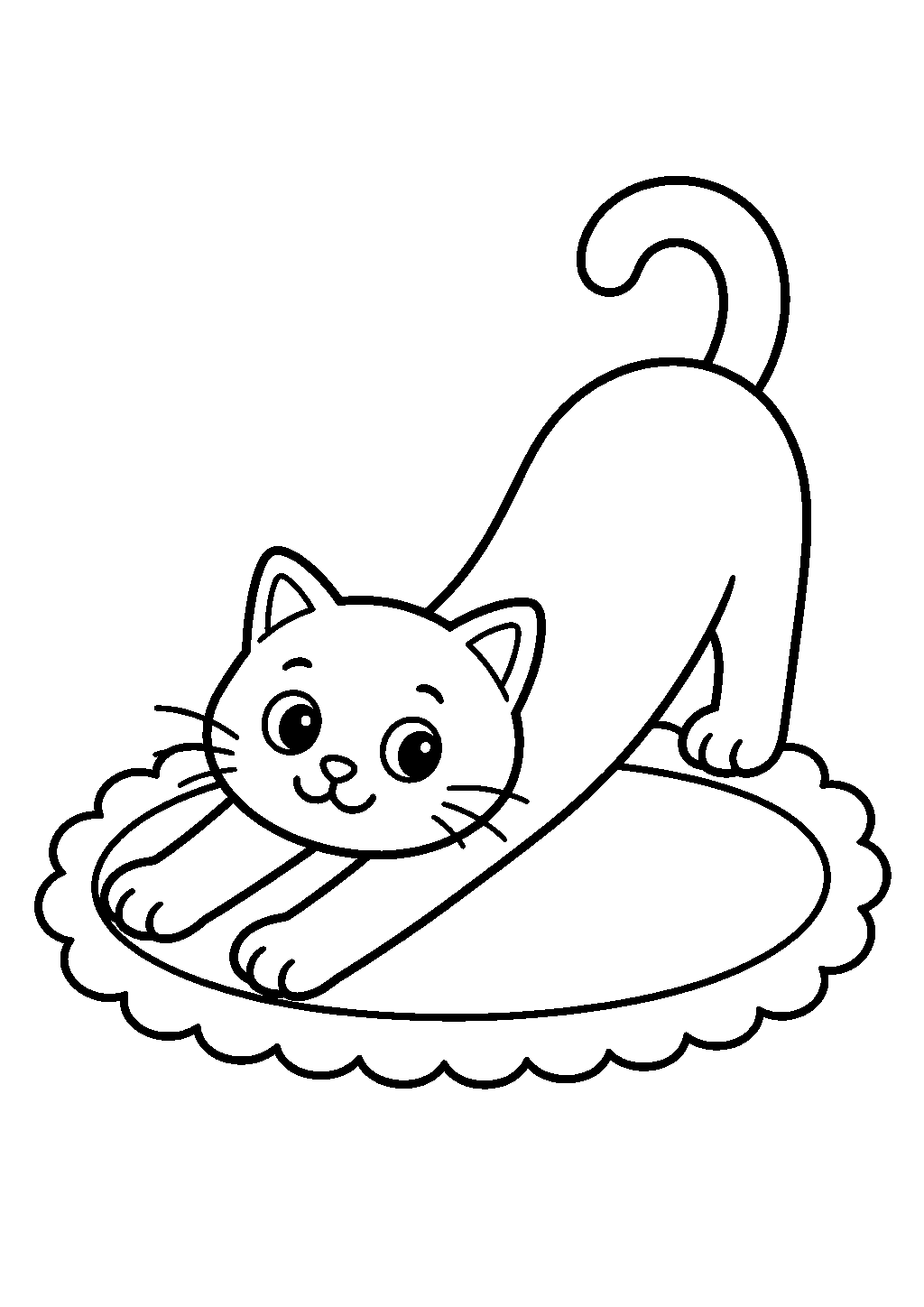
A cat stretches long on a scalloped rug after a nap. 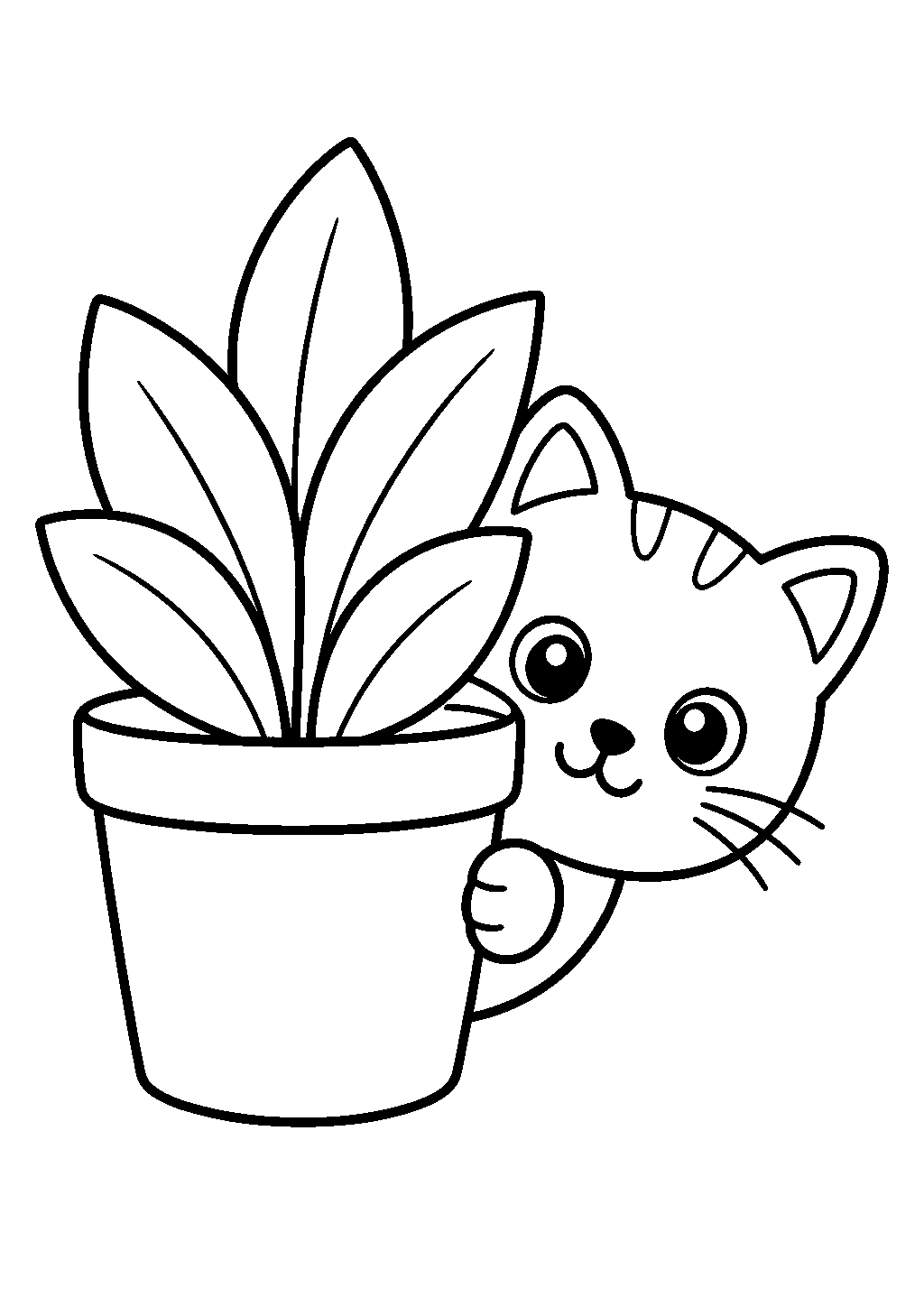
A striped kitten peeks from behind a leafy houseplant.
Printing without cropping ears or tails
Letter or A4, portrait, black and white. These cute cat coloring pages should not go through a color cartridge. You want dry white paper, not a gray-pink cast from a color copier.
Ears and tail tips sit close to the margin on the sitting portraits. Use “fit to printable area” for the first test. If the test comes back with a wide border and both ears intact, you can try 100% scale on the next sheet. Cropped ears are the usual failure, not a too-small cat.
Paper: 20 lb is enough for crayon portraits in a classroom. At home, 24 lb (about 90 gsm) keeps the window scene from wrinkling when someone works the curtains for a long time. Light cardstock helps if you use markers or if the finished page is going on the fridge under a magnet for months. Do not print two-sided. Marker and heavy crayon will telegraph through, and a cat face on the reverse will show as a shadow.
The PDF is all ten sheets in one file. For a sleepover or a classroom pet week, download that once instead of opening images one by one. Print extras of the sitting kitten and the bow-tie cat; those two disappear from the pile first.
Pet week, kitten parties, and quiet indoor days
Teachers use animal weeks and “pets at home” units because every child has an opinion about cats, including the children who are allergic and only meet them in books. Print the portraits for the whole table and keep the window scene for early finishers. A useful prompt is one sentence: “This cat lives in a house. What is it looking at?” You do not need a worksheet. If you want a science hook, talk about whiskers as sensors, then let them color. Send home only pages you have already printed on the school machine; copier margins vary.
A kitten birthday does not need the fishbowl or the plant peek. Those take too long. Put yarn, milk-bowl kittens, and the sitting portraits in the middle of the table with thick crayons. Two copies of the favorite. Fifteen minutes, then cake. If you want a craft, cut around a finished portrait (adult scissors) and tape it to a paper-bag treat sack.
Rainy days and the hour after dinner are when the household scenes earn their keep. One child at the window, another stretching the rug cat, an adult on the plant peek with a pencil. Real cats will sit on the paper. That is not a printing error. Move the page, or let the cat win and start a second copy.
Questions about these cat sheets
What ages are these cat sheets for?
Sitting portraits and the yarn page for preschool. Play scenes and the milk-bowl pair for early grades. The window, rug stretch, and plant peek for older kids and adults who want a slower sit.
How do I keep the whiskers visible?
Color the head first, then the whiskers last, with a sharp pencil. Markers fatten them into bars. If they vanish into the fur, print a second copy of that portrait and try again.
Can a teacher print these for pet week?
Yes. Give the whole table the portraits and keep the window for early finishers. Test the school copier first; some machines crop ears. Send home only pages you have already printed there.
Is there a PDF of the whole pack?
Yes. Download PDF at the top is all ten sheets in one file. No account. Print extras of the sitting kitten and the bow-tie cat; those leave the pile first.
Do the coats match real cat breeds?
They borrow breed-style fur — a long-haired cloud, a tabby loaf, a window silhouette — then add cartoon faces. Treat the bow tie as costume, not anatomy.
Related coloring pages
Holidays
christmas coloring pagesTrees, ornaments, and cozy winter moments ready for the printer.
Holidays
halloween coloring pagesFriendly pumpkins, bats, and autumn scenes — spooky-cute, not scary.
Dinosaurs
t-rex coloring pagesBig dinosaurs with bold outlines — great for little paleontologists.