Dinosaurs
t-rex coloring pages
10 free printables · Updated 2026-09-17
These drawings keep the T-Rex silhouette kids already know — huge head, tiny arms, heavy tail — and turn it into a friend instead of a movie villain. Print one sheet for a short stretch after school, or the whole pack for a dinosaur birthday table.
The real animal, and the friendlier drawing
Tyrannosaurus rex lived at the very end of the Cretaceous, about 66 million years ago. It walked on two muscular legs, used a thick tail as a counterweight, and had forelimbs so short that paleontologists still argue about what those arms were for. Adult skulls held thick, banana-shaped teeth. The eyes faced partly forward, which is a hunter’s arrangement, not a browser’s. A living T. rex was not a pet, and it did not nibble ferns for supper.
A coloring sheet for a small child cannot be a museum reconstruction without turning into a scare. These pages keep the useful parts of the body plan and drop the rest. The head is still large. The arms stay short. The tail still balances the body. Then the drawing choices change: round eyes, an open smile, cartoon claws, and a few spots on the hide. A volcano in the background is a simple cone with a drip of lava, not a disaster scene. Ferns and grass give the dinosaur a place to stand without filling the page with bone and blood.
That mix is deliberate. While a child colors, you can still say true things. T. rex stood on two legs. Those three-toed marks on the trail page are the kind of print a large theropod would leave in mud. The skeleton in the glass case is how most kids actually meet this animal — in a hall of bones, not in a jungle. The friendly face is there so they stay with the page long enough to hear that.
Ages 3-5, 6-8, and 9+
Ages 3 to 5
Pick the standing portraits: one dinosaur, almost no background, outlines thick enough for a stubby crayon. The smiling T-Rex and the waving one are the right difficulty. A preschooler will often choose two or three colors and mash them into the body. That is enough. Do not turn the session into a lesson about staying inside the lines. Name the parts out loud — teeth, tail, tiny arms — and let the page be large motor work. If two children want the same pose, print two copies before anyone sits down.
Ages 6 to 8
This is the age for habitat. Ferns, tall grass, a dirt path of footprints, and the volcano beside the dinosaur give them something to plan. They can make the animal one color and the plants another, or they can invent a purple hide because they feel like it. The science still fits in the margins: T. rex did not eat those ferns; it walked past them. The footprint page works as a short story. Ask where the animal was going, then let them color the tracks from large (near) to small (far) if they want a bit of depth.
Ages 9 and up
Hand over the nest, the parent-and-hatchling walk, and the museum skeleton. The nest has broken shells and a spotted egg, so there are edges to slow down for. The family page is two figures at different scales. The skeleton is the hardest sheet in the pack: ribs, vertebrae, a glass case, and support rods. Colored pencils earn their keep here. A nine-year-old who has already been to a natural history museum will recognize the pose and usually wants to get the bones looking worn, not cartoon-yellow.
Easy portraits: one dinosaur, big shapes
Start here if the colorer is young, tired, or new to dinosaurs on paper. Each sheet is a single T-Rex with a clear body and almost nothing competing in the background.
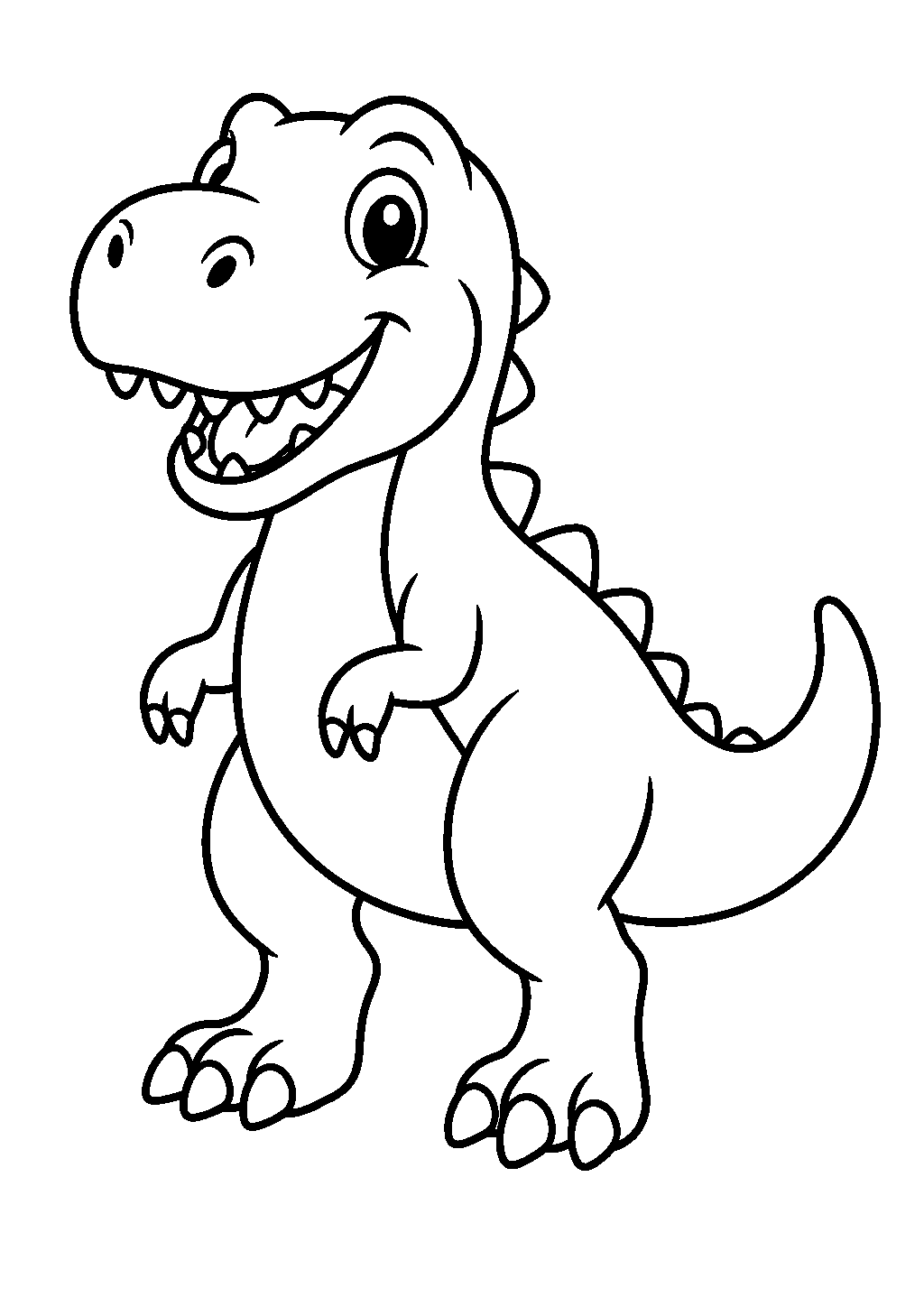
A smiling T-Rex stands tall with tiny arms and a heavy tail. 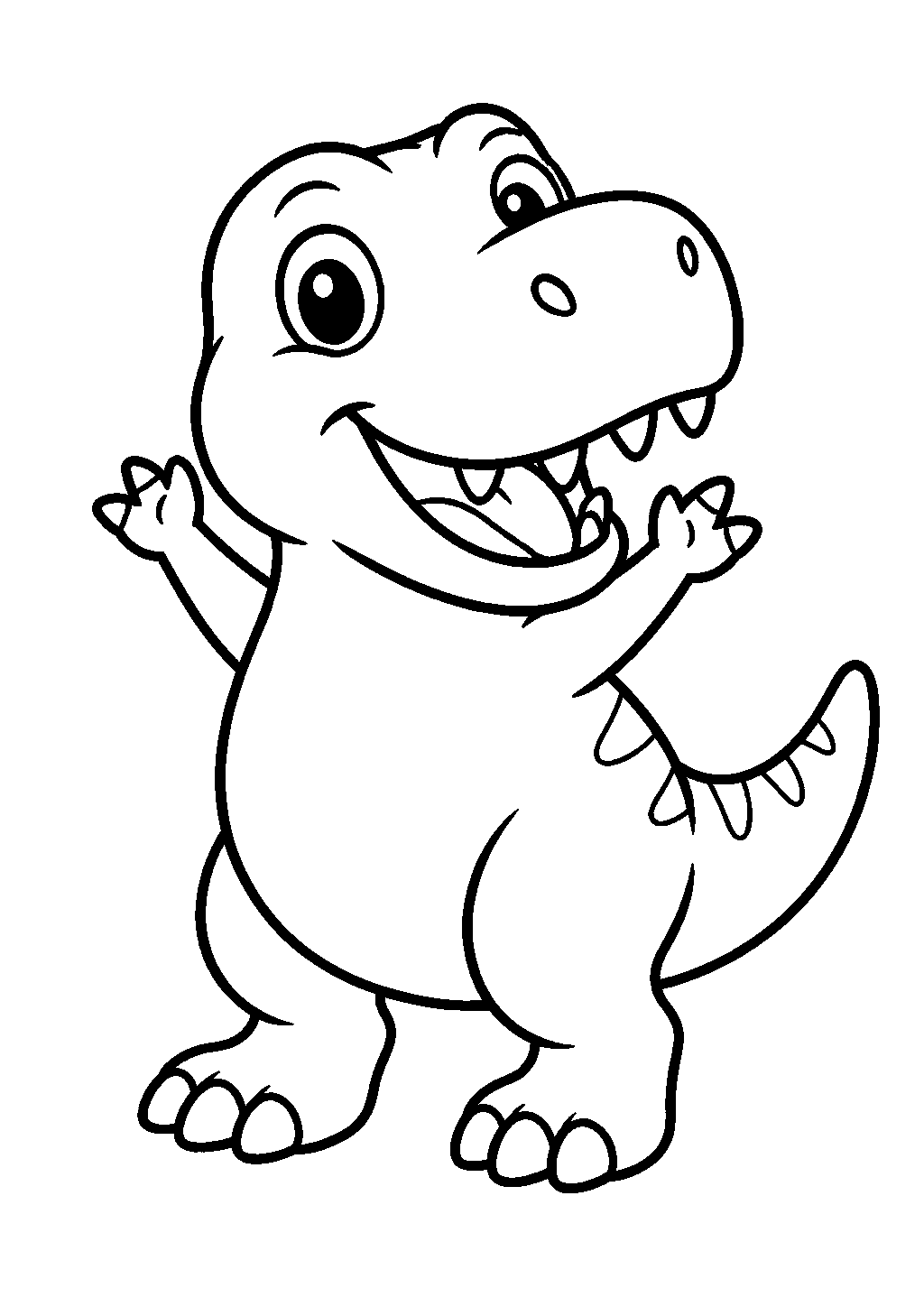
A happy T-Rex waves both short arms in the air. 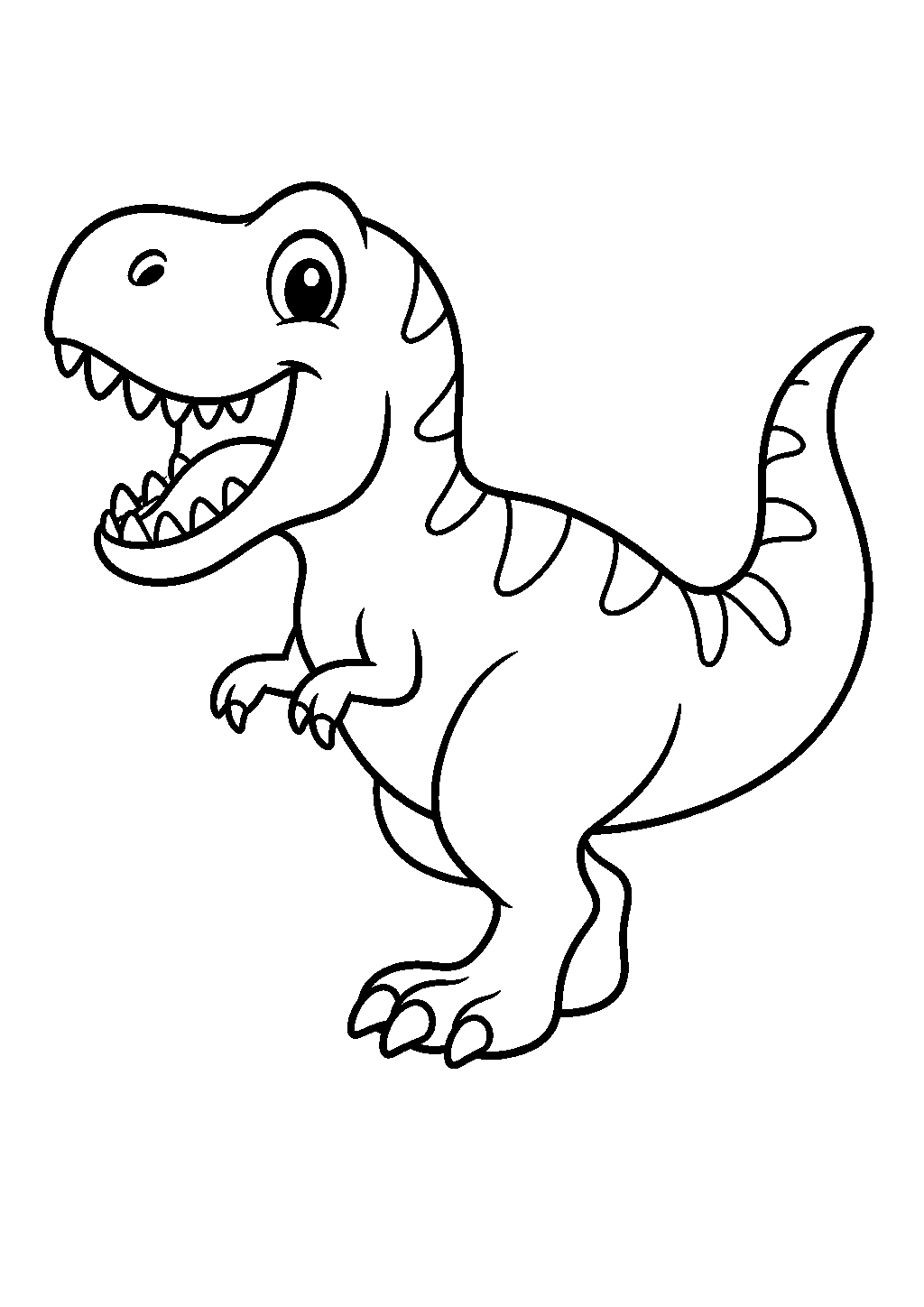
A T-Rex roaring in profile, teeth and tongue open wide.
Jungle walks, footprints, and a volcano
These four add a place. Ferns, grass, a three-toed trail, and a cartoon volcano sit around the dinosaur so a child can decide what is animal and what is landscape.
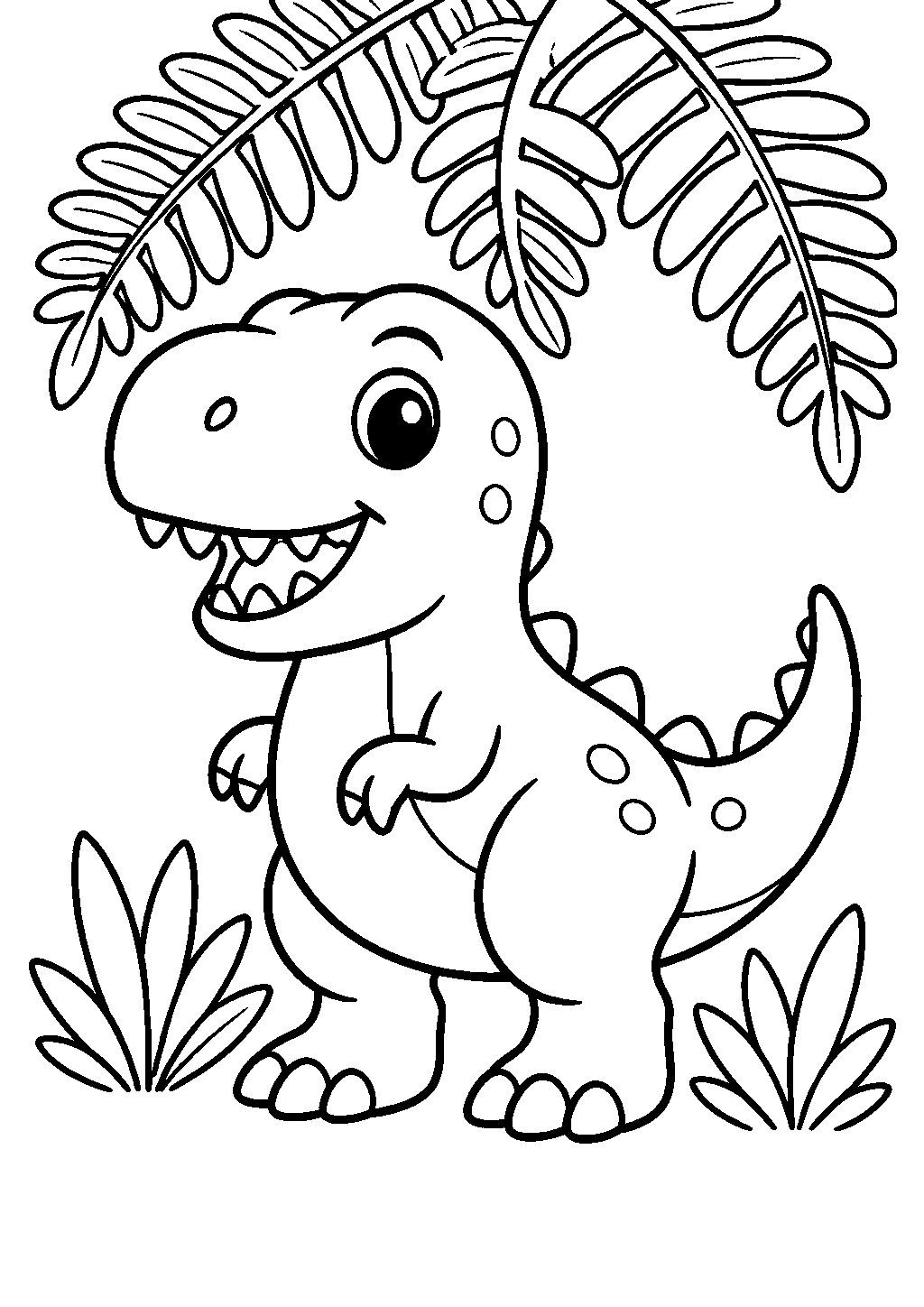
A spotted T-Rex grins under ferns in the jungle. 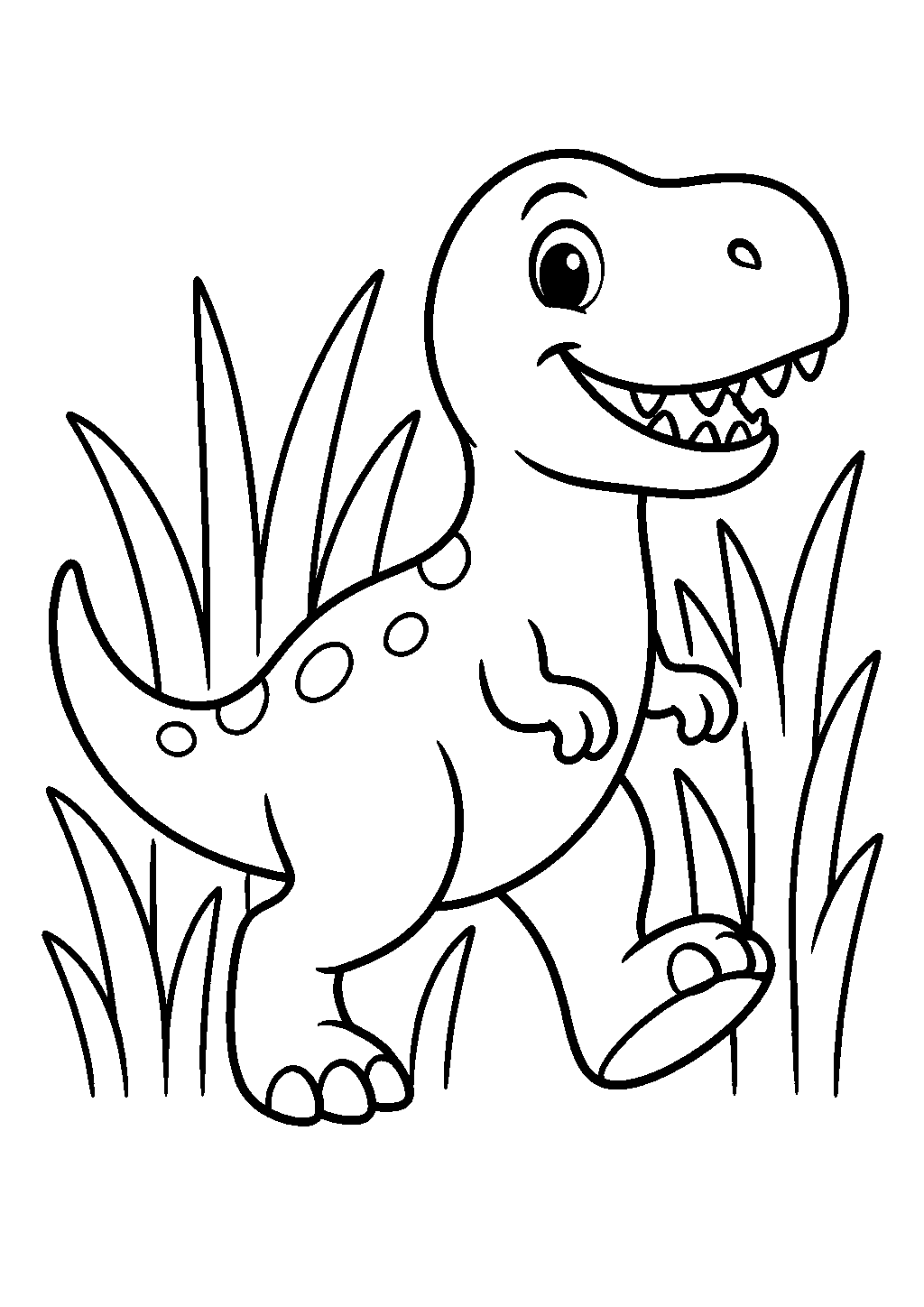
A T-Rex walking through tall grass with a spotted tail. 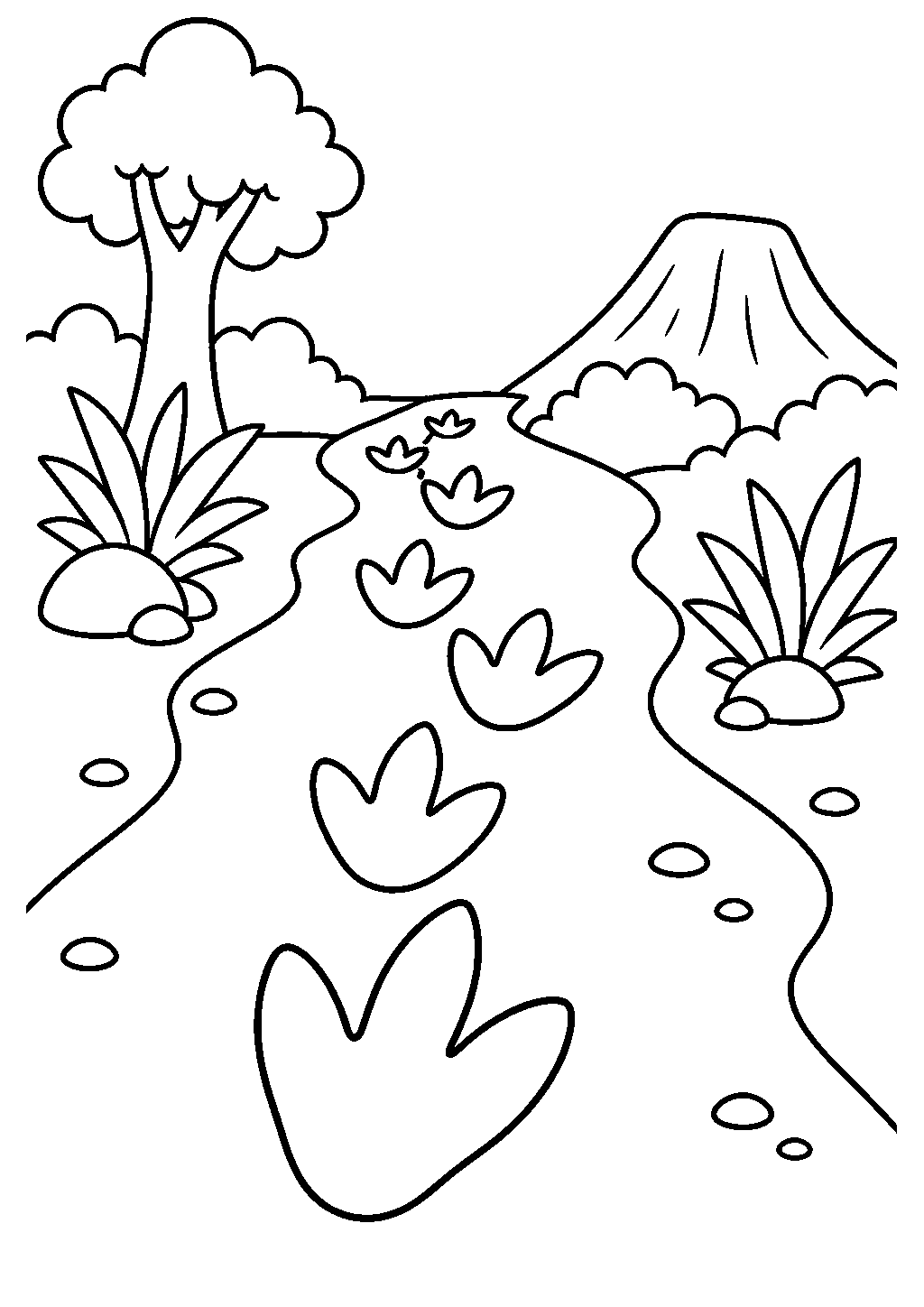
Three-toed T-Rex tracks walk a jungle path toward a distant volcano. 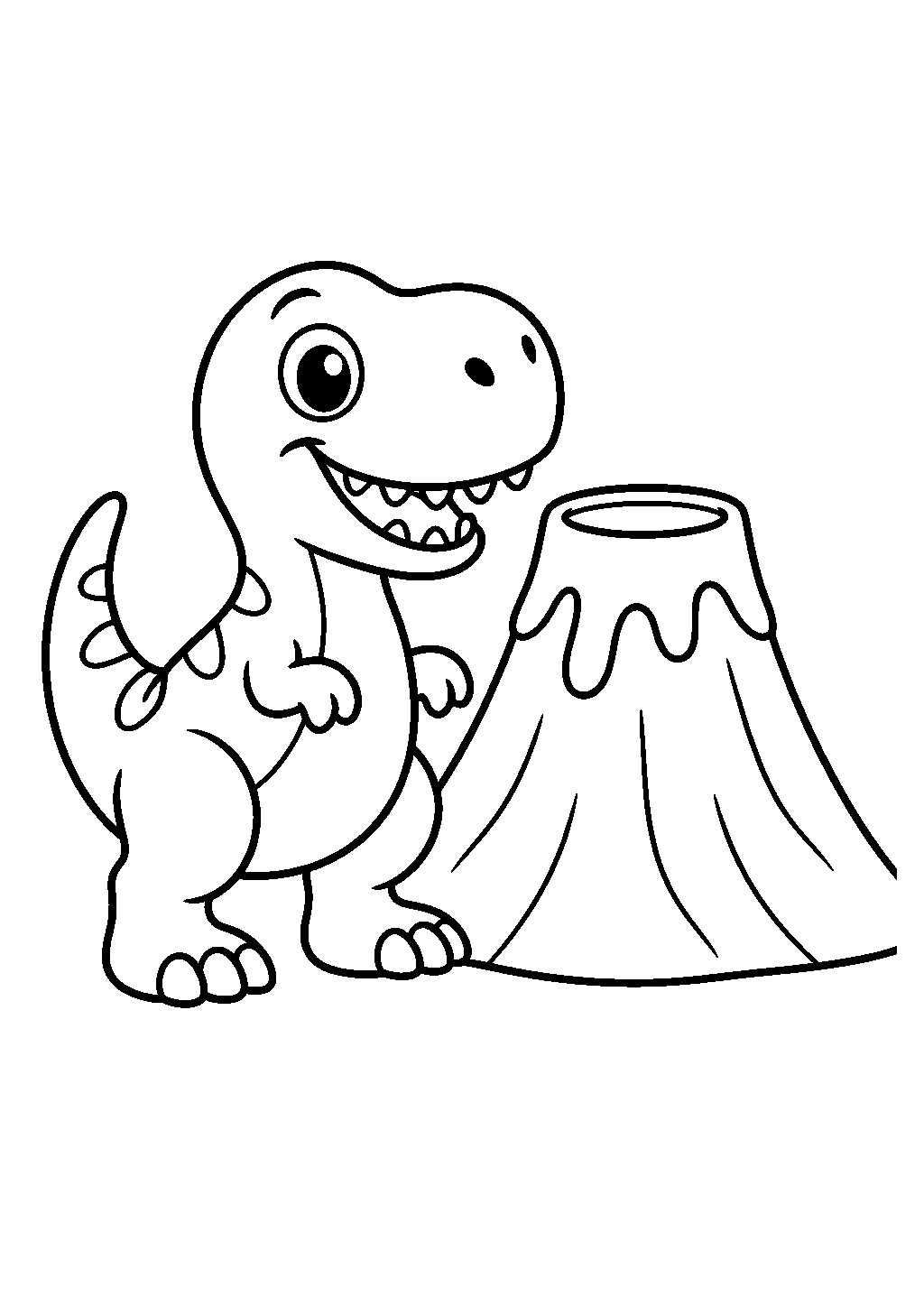
A curious T-Rex peeks at lava sliding down a cartoon volcano.
Nests, families, and museum bones
Save these for a longer sit. Hatchlings, a parent walking with a baby, and a skeleton in a display case have more edges and more than one thing to finish.
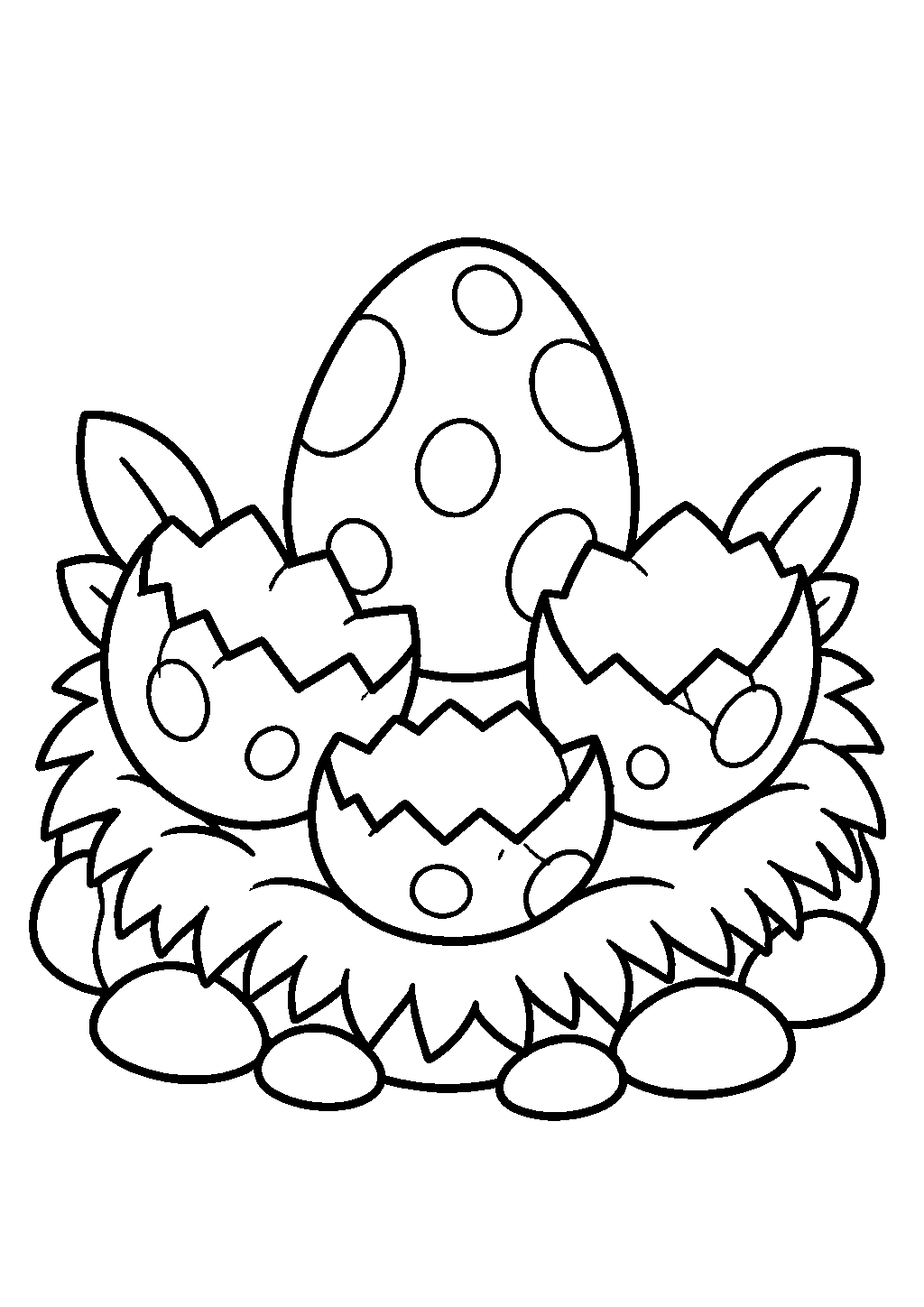
Baby dinosaurs hatch beside a spotted egg in a leafy nest. 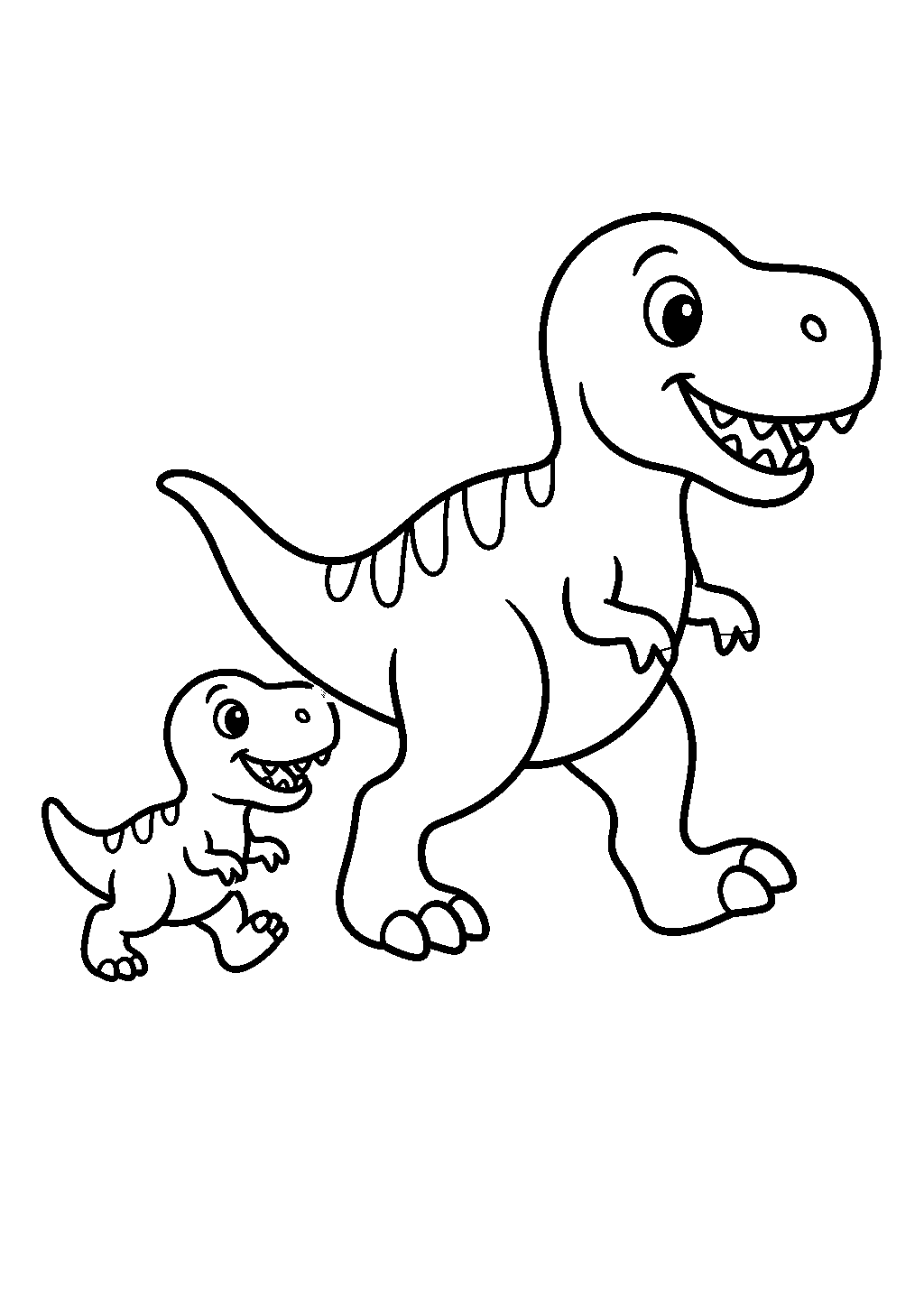
A parent T-Rex and a tiny hatchling walk side by side. 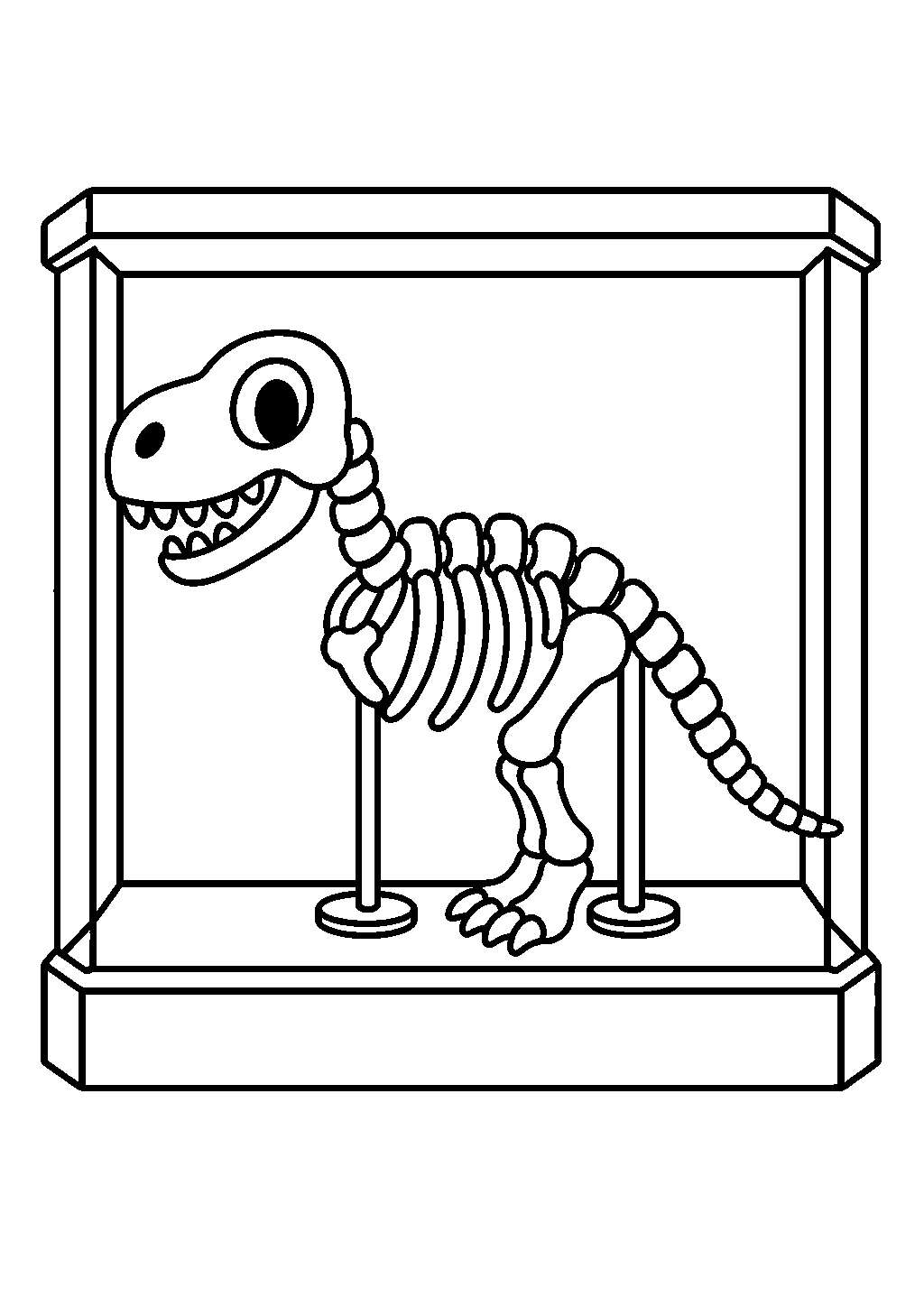
A T-Rex skeleton grins inside a museum glass case.
Crayons, pencils, and markers on dinosaur paper
Crayons are the default for this pack, and they should be. The thighs, tail, and belly are big wax targets. A preschooler can cover a whole dinosaur in two minutes. The downside is control: crayon wax does not love the gaps between teeth or the thin rods in the museum case. If those details matter, switch tools for that sheet only.
Colored pencils are slower and worth it on the skeleton, the nest, and any child who wants shading under the jaw. You can lay a dull green over the hide, then a cooler green in the shadow of the tail. Pencils also survive a backpack better than a tin of markers on a field-trip day to a museum.
Markers look bold on these outlines, which is why kids reach for them. The problem is the paper, not the dinosaur. Washable school markers will bleed through ordinary 20 lb (about 75 gsm) copy paper. You will see a ghost of the T-Rex on the next sheet in the stack, and on the table if you skipped a blotter. Alcohol markers are worse; they soak. Use 65–80 lb (176–216 gsm) cardstock, or slide scrap paper underneath every page. Do not use the back of a marker page for a second drawing. It will already be stained.
How to print the pack without losing the tail
Use letter paper in the United States or A4 everywhere else, portrait orientation. These t-rex coloring pages are line art. Print them in black and white or grayscale. A color print wastes ink and lays a faint tint on the paper that fights whatever crayon comes next.
Paper weight is the decision that actually changes the session. Plain 20 lb copy paper is fine for crayons and a classroom stack. 24 lb (about 90 gsm) is a better home default: a little stiffer, less wrinkle when the page is worked hard. If you plan to tape a finished dinosaur to a party wall or send it home as a gift, step up to light cardstock. Heavier stock also tames marker bleed.
In the print dialog, start with “fit to printable area” or “shrink to fit.” Tails and rear claws sit close to the edge on several sheets. A printer with wide hardware margins will crop them at 100% scale. If your test page has generous white borders and nothing is cut, you can switch to actual size for a larger dinosaur. Print one portrait first, then the rest of the pack. The PDF download is the same ten drawings in one file, which is the saner choice for a birthday stack.
Classroom fossils, birthday tables, rainy-day roars
For a classroom fossil unit, print the walking dinosaur and the museum skeleton as a pair. Kids color the living animal first, then the bones. The conversation writes itself: what stayed (big head, short arms, long tail) and what the drawing invented (the smile). The footprint trail works as a five-minute “which way was it walking?” before anyone opens a crayon box. Send extras home only if you have already tested your copier margins; some school machines crop tighter than a home inkjet.
For a dinosaur birthday, skip the nest and the skeleton. Put the waving T-Rex and the fern portrait in a pile, two copies of each favorite, and a cup of chunky crayons. The activity is ten to fifteen minutes between cake and a game, not an art lesson. Tape a finished page to the gift table if you want a backdrop that did not come from a character franchise.
On a rainy afternoon, one child can take the easy portrait while an older sibling takes the skeleton. The footprint page doubles as a tiny story: color the tracks, then decide whether the volcano is smoking. If the roar in the house gets loud, that is the point of the theme. Hand them the page, not a screen, and let the dinosaur be noisy on paper.
Questions about this dinosaur pack
What ages are these dinosaur sheets for?
Portraits for ages 3 to 5, habitat pages for 6 to 8, and the nest, family walk, and museum skeleton for 9 and up. Pick by how busy the background looks, not by a label on the file.
Will markers bleed through the paper?
On ordinary 20 lb copy paper, yes. Washable school markers ghost onto the next sheet; alcohol markers soak. Use 65–80 lb cardstock or scrap paper underneath, and do not draw on the back.
Can I print these for a classroom or a dinosaur birthday?
Yes. Pair the walking animal with the skeleton for a fossil unit. For a party, print the waving portrait and the fern page, two copies of each favorite, and skip the nest.
Is there a PDF of all ten drawings?
Yes. The Download PDF button at the top is the same ten sheets in one file. No account.
Are the drawings accurate T. rex anatomy?
They keep the real body plan — huge head, tiny arms, heavy tail, three-toed prints — then add a cartoon face so a child will sit with the page. They are not museum reconstructions.
Related coloring pages
Holidays
christmas coloring pagesTrees, ornaments, and cozy winter moments ready for the printer.
Animals
cute cat coloring pagesSoft whiskers and playful poses for kids and cat-loving adults.
Holidays
halloween coloring pagesFriendly pumpkins, bats, and autumn scenes — spooky-cute, not scary.